Tuesday, September 29, 2015

20 Questions in Science

One of the 20 biggest questions in science that I have is how to beat bacteria. I am interested in this because the discovery of antibiotics greatly impacted the quality and length of human life. Now,we are being threatened by antibiotic resistant bacteria. This threatens to bring us back to times where millions of people died of bacteria causing infections every year. To combat this, people are exploring the genetic sequence of bacteria and making new antibiotics. In addition, there has been research of transplanting bacteria from fetal matter  that are good to patients who have the bad bacteria.

List of Questions in Science that I have
1.) How did bacteria evolve into humans?
2.) How advanced will the Human race become?
3.) Will we ever lived in a society with artificial intelligence?
4.) Can we stop global warming?
5.) Will we be able to manipulate what genes we pass on to our children?
6.) Can we find an effective cure for viral infections?
7.) Can we make medicine with minimal side effects?
8.) Can we travel to other galaxies?
9.) Can we find a source of energy that is cheap, reliable, renewable, and non-polluting?
10.) Can we have vaccines against cancer?
11.) Can we map an evolutionary tree that maps relationships between all species that have ever existed.
12.) Can we figure out the quality of our air?
13.) Can we figure out how fresh and how nutritious our food is?
14.) Can we easily figure out what is in our food?
15.) Can we find out how safe our water is?
16.) Can we easily make recycled paper.
17.) What are the most effective ways to use less water?
18.) How can we lower cost and improve efficiency of solar panels.?
19.)  What are the most effective ways to reduce our carbon footprint?
20.) How can we make life less susceptible to disease and climate change. 

Monday, September 28, 2015

Identifying Questions and Hypotheses

This study determined the concentration of chemicals in electronic cigarettes via liquid chromatography–tandem mass spectrometry. It is not known what chemicals are in electronic cigarettes and what concentrations they are in. The study used a gas chromatography (GC), which tells what chemicals are in a solution. It identifies the presence of a certain chemical and measures the amount of it. Specifically, the study was looking for a special type of chemicals called tobacco specific nitrosamines, which are highly carcinogenic, cancer causing. The results of the experiment was that there was a lot of tobacco specific nitrosamines. In fact, it was 10 times more than reported by studies done by the e-cigarette companies.
The question of this lab was to figure out if tobacco specific nitrosamines (TSNAs), which are heavily carcinogenic, and are found in traditional cigarettes. Other studies have tried to figure this out, but their sample sizes were too small. Gas chromatography is a widely used method for determining the presence of TSNAs. It was hypothesized that there would be a presence of TSNAs in electronic cigarette liquid.
Previous information needed in order to generate a hypothesis would be a knowledge of electronic cigarettes. People would also need to have a basic understanding of the gas chromatography method and how electronic cigarettes work.


Monday, September 21, 2015

Unit 2 Reflection

In this unit, I learned about the molecules that make up life. I first learned about the basics of chemistry. This included the parts of an atom and the properties of water. Atoms are made up of protons, with a positive charge, neutrons with a neutral charge, and electrons with a negative charge. One of the properties of water is that it is polar. This means that the oxygen atom has more of the electrons than the hydrogen atoms. This allows water to form hydrogen bonds. Water is also very cohesive, meaning that it likes to stick to other water molecules, and it is very adhesive, meaning that it likes to stick with other substances. We also learned about the pH scale, which ranks substances on a scale of 1-14 based on how much h+ ions they have. Having less h+ ions, a ranking from 1-6, means that the substance is acidic. Having more h+ ions, a ranking from 8-14, means that the substance is basic. Water is neutral, with a score of 7.

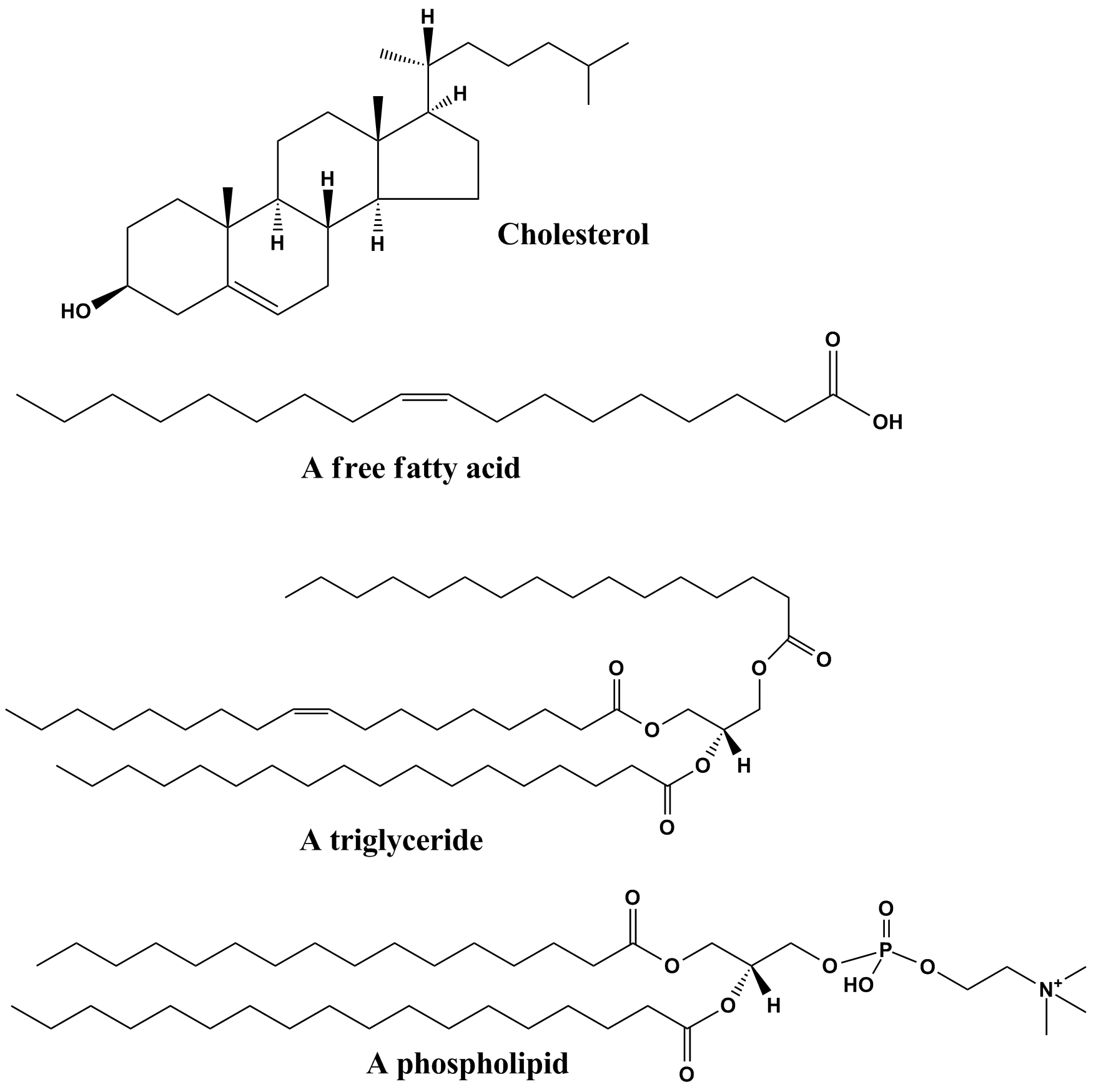
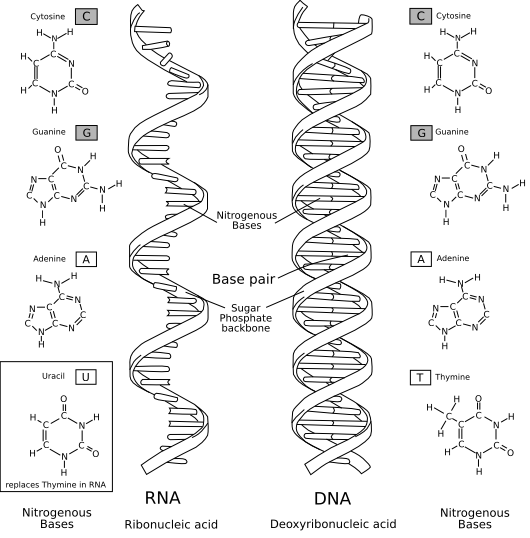
Next, I learned about the 4 macromolecules: carbohydrates, lipids, nucleic acids, and proteins. Carbohydrates are made up of carbon, hydrogen, and oxygen. They form ring like structures. Monosaccharides have one ring, disaccharides have two rings, and polysaccharides have many rings. The function of carbohydrates is to store energy. Lipids are made up of hydrogen and carbon. They are usually hydrophobic. Their function is to store energy and make up membranes. Most membranes are made up of phospholipid membranes. The inside is hydrophobic, while the outside is hydrophillic. Lipids are put into 2 classes: unsaturated fats and saturated fats. Saturated fats are just straight chains, but unsaturated fats are double bonded. nucleic acids are made up of neucleotides. Nucleic acids are made up of a base, a sugar, and a phosphate group. They are classified into 2 groups: DNA and RNA, and they contain genetic material that makes you "you." Finally, proteins are mad up of amino acids. Proteins do many jobs, such as speeding up reactions and providing structure.

Lastly, I learned about enzymes and what affects them. Enzymes help speed up reactions by lowering the activation energy. Enzymes can be affected by pH and temperature. When conditions are not optimal, the enzyme denatures.


Lipid
Carbon
Nucleic acid

Sunday, September 20, 2015

Cheese Lab Conlusion

Cheese Lab Conclusion
In this lab, we asked: “What are the optimal conditions and curdling agents for making cheese?” Based on my data, cheese is best made in a hot, acidic environment with chymosin added in. In the experiment, we measured the time to curdle for various curdling agents, chymosin, rennin, buttermilk, and none. We tested whether a acidic or basic environment and whether a cold or hot environment was best. In an acidic environment,both milk with chymosin and  milk with rennin curdled in 5 minutes.  In a hot environment, milk with chymosin curdled in 5 minutes and milk with rennin curdled in 10 minutes. In the control temperature environment, the milk with chymosin and the milk with renin both curdled in 15 minutes. In the control pH environment, milk with chymosin curdled with 15 minutes and milk with rennin curdled in 10 minutes. Milk in a basic or cold environment, or milk with buttermilk or no curdling agent did not curdle within 15 minutes.  This was expected because a cow's stomach,  where renin is made,which makes milk naturally,  is acidic and hot. According to current scientific knowledge, chymosin is the fastest curdling agent. Since cows naturally produce rennin, it would be best to emulate the conditions of a cow’s stomach to curdle cheese fastest.
While our hypothesis was supported by our data, there could have been some errors. A possible error was that since we only checked for curdling every five minutes, The cheese could have curdled in between that time, so it would have been recorded as taken more time than it really did. Another possible error could have been due to lack of precise measuring. Even a little bit more of an ingredient could have made the time to curdle more or less. To combat these errors, the test tube should be checked for curdling every minute and more time should be spent accurately measuring out ingredients,
This lab was done to demonstrate what the optimal conditions and curdling agents for making cheese. From this lab,  I learned about how enzymes can speed up reactions, and how pH and temperature affect these enzymes. This directly correlates to what I learned in class. Based on my experience with this lab, I now know the effects of enzymes on reactions and the effext of pH and temperature on enzymes.


Time To Curdle (Minutes)
Curdling Agent
chymosin
rennin
buttermilk
milk (control)
Acid
5
5


Base


Cold


Hot
5
10


Temperature Control
15
15


pH Control
15
10


Tuesday, September 15, 2015

Sweetness Lab

In this lab, we tasted different types of carbohydrates and rated their sweetness. The purpose of this lab was to find out how the structure of a carbohydrate affects its sweetness. Based on my observations, monosaccharaides are the sweetest type of carbohydrate, followed by disaccharides, and finally polysaccharides.  In the lab, we rated the sweetness of the sugar on a scale of 1-200, 1 being no sweetness at all, and 200 being the sweetest thing you have ever tasted. The monosaccarides glucose, fructose, and galactose had scores of 120, 180, and 70. The disaccharides sucrose, maltose, and lactose scored 100, 40, and 20. Finally, the polysaccharides starch and cellulose scored 10 and 1. The monosaccharides had the highest score, followed by disaccharides and polysaccharides. This evidence supports the claim because the taste receptors on the tongue can detect sweetness better than almost everything. 


Carbohydrate
Type of Carbohydrate
Degree of Sweetness
(1-200)
Color
Texture
Other Observations/Connections to food
Sucrose
disaccharide
100
white
granular
It is like table sugar
Glucose
monosaccharide
120
clear white
powdery
Found in bread
Fructose
monosaccharide
180
white
granular
Found in frosting
Galactose
monosaccharide
70
white
powdery
Looks like powdered sugar
Maltose
disaccharide
40
brown
powdery
Found in beer
Lactose
disaccharide
20
white
powdery
Found in milk
Starch
polysaccharide
10
white
granular
Found in bread
Cellulose
polysaccharide
1
white
powdery
Found in plant cell walls


A picture of the different types of sugars that I tasted


The structure of carbohydrates might affect how they are used by cells/organisms. The amount of energy in a carbohydrate depends on the amount of bonds it has. Cells might use polysaccharides first because they have the most energy. Only when there are no polysaccharides then will the cell resort to disaccharides and monosaccharides.

Not all the testers gave the same rating. We all have a different amount of taste receptors dedicated to sweetness. As a result, we perceive sweetness differently. Another possibility is that the taster forgot to drink water, so their taste would be dependent on what they had tasted before. The last reason is that someone could have had a cold. When you have a cold, most things taste more bland than they normally do. This results in skewed ratings. 

Humans taste sweetness through receptor proteins, commonly known as taste receptors. Once something sweet touches the receptor cell for sweetness, that cell will send a message to the brain. It is like a lock and key. The sweet object "key" has a chemical reaction with the receptor cell "lock" that causes it to send a message to the brain. Tasters could rank sweetness differently because people have higher or lower abilities to taste food. People who are supertasters detect more sugar than normal people, and people with lower abilities detect less sugar than normal people.