Wednesday, December 9, 2015

Unit 5 Reflection

     In this unit, we learned a lot of different things. First we learned about our genetic code, DNA. DNA is made up of a 5 carbon sugar called deoxyribose, a phosphate backbone, and one of 4 nitrogenous bases, adenine, guanine, thymine, and cytosine. We also learned about the difference between pyrimidines and purines.  Adenine and Guanine are purines, meaning that they are double-ringed. On the other hand, Thymine and Cytosine are pyrimidines, meaning that they are single ringed. A always pairs with T, and G always pairs up with C. DNA is also antiparallel: it runs from the 3' to the 5' direction.
Nitrogenous bases
    In the next vodast, we learned about how DNA copies itself. First a DNA unzips itself using helicase by breaking hydrogen bonds. DNA polymerase then matches corresponding nucleotides. The result is two identical DNA molecules, each containing one of the original strand's DNA. This type of replication is called semiconservative replication. 
     The next vodcast was about protein synthesis, the central dogma of biology. First we learned about the differences between DNA and RNA. DNA is double stranded, while RNA is single stranded. RNA has ribose, while DNA has deoxyribose. Finally, RNA has the base uracil, while DNA has the base thymine. The first step of protein synthesis is transcription. DNA unzips, and RNA polymerase matches nucleotides to make an RNA strand, known as messenger RNA. mRNA goes to the ribosome. The ribosome reads a codon, 3 bases at a time. Each codon codes for one amino acid. The result is a protein.
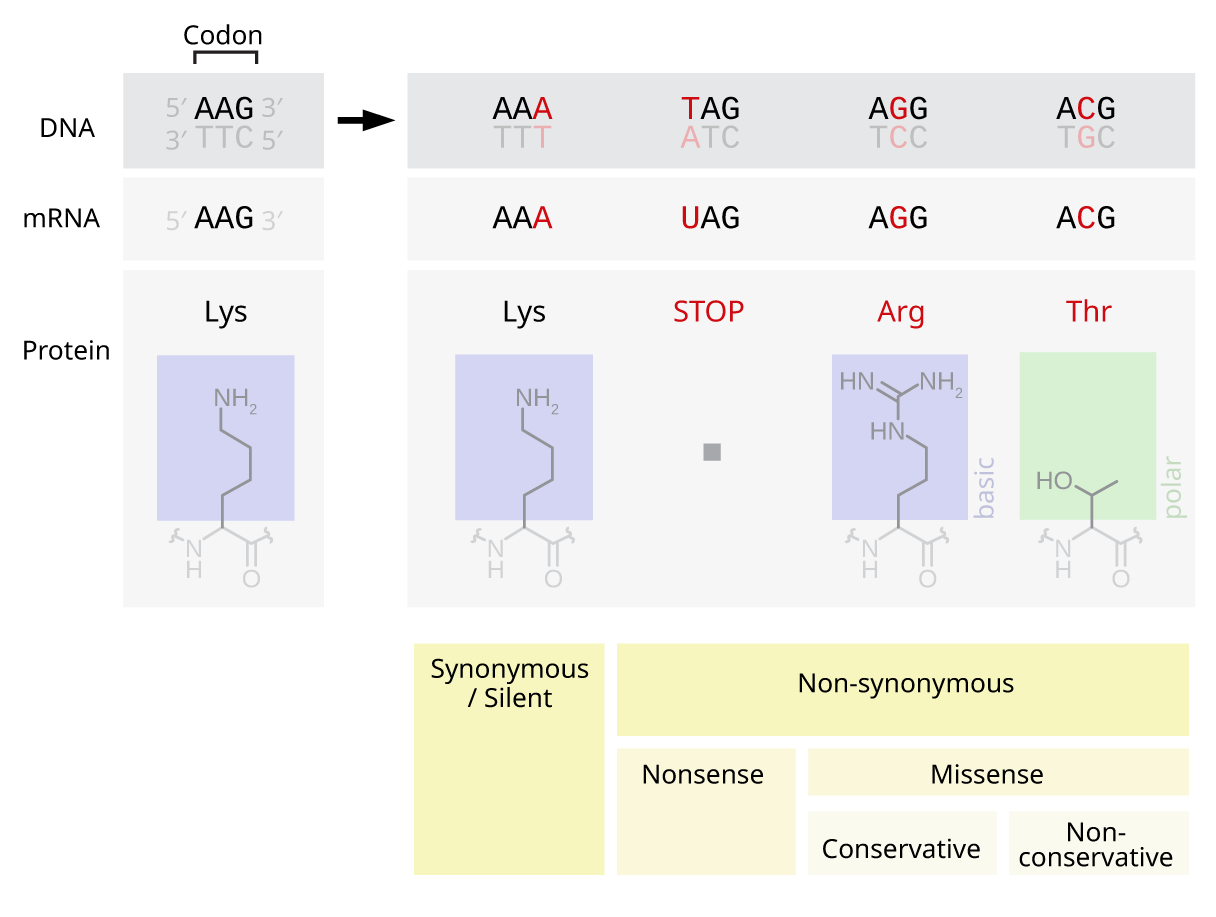
     Next, we learned about mutations. Mutations change the DNA. Point mutations change a single base. Examples include substitution and. We also learned about frameshift mutations, which include insertions and deletions.
     Finally, we learned about gene expression and regulation. It is very hard to explain, so it is better to see a picture.
Gene Expression and Regulation


I have understood most of what was taught in this unit. For me, the most confusing things were protein synthesis and gene regulation. Through labs and Mr. Orre's explanations, I understand them better, but still need practice with them. I feel that I am a better student. I learned to be proactive and relearn things that I had trouble understanding. A lot of the previous units make more sense now. I either had to apply knowledge from a previous unit or relate this unit to something else.
I am very curious about this topic. I want to learn more about protein synthesis and what causes mutations. Last unit, I took a VARK questionnaire to see how I learned best. I tried applying these habits to my study routine not just for biology, but for other classes. For the most part, it has worked.  This unit has been very interesting, and I have learned a lot.


Tuesday, December 8, 2015

Protein Synthesis Lab Analysis

     In this lab, we tested how proteins are produced by our body. First, a copy of a DNA gene, called Messenger RNA, goes to the cytoplasm. Next, the mRNA bonds to a ribosome. The ribosome reads the mRNA as a codon, three bases at a time and adds an amino acid to a chain. Amino acids bond together to make the primary structure of a protein The chain twists and turns to form a protein.
Protein Synthesis

     The effects of mutations on proteins can range from none to very severe. A substitution seemed to have the least affect. In our case, it did not effect the protein sequence. The worst it could do was changing one protein of the sequence.The next worst mutation was insertion. When an extra base was inserted into the DNA, the protein changed dramatically. Every protein after the mutation was different than the original protein chain. The proteins before the mutation stayed the same. The mutation with the greatest effect was the deletion. It completely changed the structure of the protein. It coded for different proteins than the original strand after the second protein. After the fourth protein, there was a stop codon, meaning to stop translating. The resulting sequence was only four proteins long. There is an effect on where the mutation is placed. For substitution, it does not matter where the mutation is. For insertions and deletions, the closer the mutation is to the beginning of the gene, the more damage the mutation will do.
Mutations
When I got to choose my own mutation, I decided to use a deletion. I used a deletion because it had the greatest effect on the protein in the previous problems. I decided to put my mutation at the very front. The first letter of the amino acid chain was changed. The result was a completely different protein. It had the greatest effect out of all the other mutations. I chose to put the mutation in the very front to maximize the power of it. Since the mutation was in the very front, everything was changed.
My mutation

There are many different types of genetic disorders caused by mutations. An example is Tay-Sachs disease. Mutations in the Hexa gene, which provides instructions for making beta-hexosaminidase A, an enzyme responsible for critical functions in the brain and spinal cord. Symptoms of the disease include loss of motor skills, vision and hearing loss, and paralysis. Although the disease is not very common, there are still people who have it. It shows the power of mutations. 
Gene whose mutations cause Tay-Sachs disease


Sunday, December 6, 2015

DNA Extraction Lab Conclusion

     In this lab, we asked the question, "how can DNA be separated from cheek cells and be studied?" We found out that through homoginazation, lysis, and precipitation, DNA can be extracted. First we swished Gatorade in our mouths, which was the homoginzation. Gatorade is a polar liquid, and it breaks down the cell membrane. Next, we added, salt, which facilitates precipitation by shielding the negative ends of the phosphates of DNA, allowing them to move closer together. Soap and pineapple juice were also added to facilitate lysis. The soap interferes with the polar interractions in the phospholipid bilayers. The pineapple juice contains catabolic proteases, which break down proteins, called histones, which the DNA wraps itself around. Finally, we added cold alcohol, which is nonpolar, while the DNA is polar. Since opposites attract, the DNA floated to the top. Once these steps were complete, we saw DNA.  The DNA looked like little white strands. The way that we extracted DNA is supported by currently held science. This data supports our claim because since we saw DNA, then our procedure had to work.
   Although our results were expected, we made some mistakes. One mistake was not getting enough cheek cells. We did not scrape our mouths enough, and as a result, not much DNA actually showed up. Another mistake that we made was that we poured the alcohol too fast. This allowed the alcohol to mix with the Gatorade mixture. As a result, less DNA floated to the surface. In order to combat these problems, we should scrape our mouths more and pour the alcohol slower.
  This lab was done to demonstrate that DNA can be extracted. This lab related to our unit on enzymes and DNA structure. We were able to understand the processes in which DNA was extracted due to what we learned in the Chemistry for Biologists unit and the unit on DNA structure. Some examples include the fat that phospholipids have a polar head and a nonpolar tail. Based on my experience with this lab, I can extract DNA from other organisms, such as strawberries.
DNA in testube